
Founders build. We clear the path.













































We support you across the entire lifecycle.
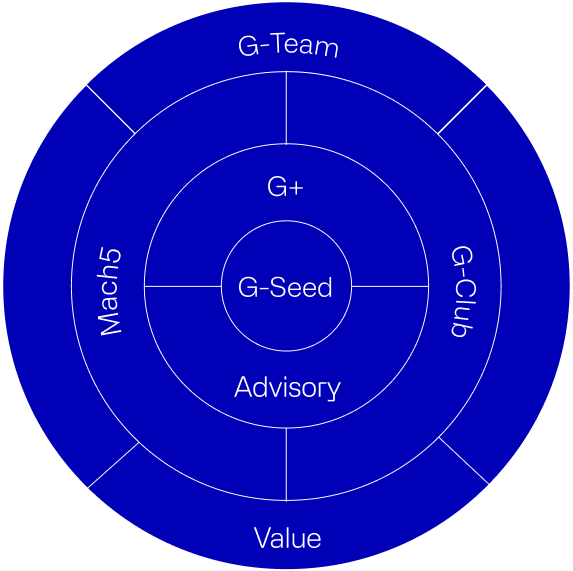
We built a full framework to back founders from seed to market leadership. One clear path with the right tools, people, and momentum.G-Seed starts it. G+ scales it. Mach5 accelerates it. G-Club surrounds it.Focused on Cybersecurity and AI, Glilot brings hands-on experience, flexible capital, and a global network that delivers results. We cover every stage with real, hands-on support.
G-Seed
Backs founders from first spark to scale. Early, deep, aligned.
G+
For founders ready to scale. Leads A/B rounds toward growth and dominance.
Exclusive wealth management for tech founders.
Value
We support founders with practical value, wrapping them with professional support from every possible type needed.
Five rounds of customer insight to hit product-market fit fast.
Fast access to top industry minds.
A VC that is deeply aligned with you - yep, that exists.


I love the Glilot team. They're incredibly professional.
Name:
Rotem Iram
Position:
CEO of At-Bay


Glilot helped us with every possible challenge, such as opening doors, hiring, and providing insights.
Name:
Daniel Krivelevich
Position:
CTO of Cider Security


Glilot is one of the most amazing VCs in cyber security.
Name:
Shay Morag
Position:
CEO of Ermetic


Glilot is founder-friendly and here to support founders and companies.
Name:
Yoav Levy
Position:
CEO of Upstream Security


Israel is a global supplier of AI solutions, yet when it comes to applying them internally, it lags behind. We know what to do, we just don’t have the machinery to do it.
The obstacles are familiar. Ministries take a “territorial” approach to information and are reluctant to share it with one another. The Mandatory Tenders Law imposes procurement timelines that cannot keep pace with AI. And the National Digital Agency lacks the authority to compel ministries to act. Without parallel organizational reform, investment in technology may yield only limited benefit.
The five principles below are not theoretical ideas. Each is based on a proven model that has been tested in one or more countries, and together they set a practical order of priorities for the national AI directorate, established in September 2025 within the Prime Minister’s Office following the Nagel Committee’s recommendations.
1. Build a shared data infrastructure, with clear obligations to participate
The component that every expert points to as a necessary condition for adopting AI in the public sector is a unified data infrastructure that allows secure information exchange between ministries.
Estonia’s X-Road offers a useful model. Rather than creating a single central database, Estonia chose a federated model: each ministry retains ownership of its data while allowing other ministries encrypted access. Launched in 2001, X-Road is relatively inexpensive to implement and has been found to save the Estonian public sector thousands of working hours a year. It now supports more than 3,000 public services in Estonia alone and has been adopted by more than twenty countries.
For citizens, the practical significance is straightforward. An Estonian citizen applying for a benefit does not need to collect documents from other ministries: the system brings the data together and makes it available.
Israel does not need to reinvent the wheel. In 2019 it established a comparable infrastructure, the Government Information Highway. Yet a November 2024 State Comptroller report found that only 9% of government services had actually been connected to it. The Comptroller stated explicitly that the root of the failure is not technological but institutional: the National Digital Agency has no authority to compel ministries to connect, and they have not done so.
The required work therefore has both a technical and an institutional dimension. A dedicated data-cleaning team within the national directorate should map existing datasets, identify problems, remove duplication and establish common structures. The most critical component, however, is primary legislation that obligates the ministries that hold information “territorially”, such as Health, the National Insurance Institute and the Tax Authority, to share it, balanced against the Privacy Protection Law, and backs that obligation with an enforcement mechanism.
Without a binding obligation to share, the failure of the Information Highway will simply repeat itself in the age of AI.
2. Adapt procurement to the pace of AI development
Under the Mandatory Tenders Law, a typical government tender takes eight to eighteen months, and that is only the first stage of a long procurement process. This is a structural barrier: by the time a tender for a language model is completed and a contract signed, the model on offer will be obsolete.
The solution starts with amending the Mandatory Tenders Law to allow open framework agreements. Any supplier that meets basic criteria, including information security, financial stability and proven experience, would join a pool of approved suppliers within a few weeks, without a separate tender for each order. Ministries could then buy from the pool through a short “mini-tender” lasting only weeks. This model has been widely adopted in the British and American public sectors: Britain’s G-Cloud framework has registered more than 5,000 suppliers since 2012.
Usage-based purchasing would complement this approach. Instead of committing in advance to an annual usage ceiling, a ministry would pay according to actual consumption, such as the number of data-sharing requests, data volume or computing hours. This suits the early stages of adoption, when the scale of use is not known in advance.
Alongside these purchasing routes, Israel needs regulatory sandboxes. These are controlled environments in which the state allows companies to test a new technology for a limited period under close supervision. They let both companies and regulators experiment with the technology, which can lead to lighter and more effective regulation. Israel has already started down this path: in 2025 the Innovation Authority and the Ministry of Education opened a NIS 10 million sandbox for personalized learning, and in 2026 the Ministry of Health followed with one for medical AI. The next step is to extend the model to the National Insurance Institute, local authorities and the Tax Authority.
3. Give public employees consistent access to secure AI tools
Singapore offers the model: building an organizational infrastructure that allows public servants themselves to lead AI adoption in their work. Its government technology agency, GovTech, developed and distributed three main tools across the public service: Pair, a general AI assistant for writing, summarizing, translation, document processing and research; SmartCompose, a writing tool; and AIBots, a platform for building chatbots. By the second quarter of 2025, Pair had some 64,000 monthly active users, about 42% of Singapore’s civil service.
Britain completes the picture. In February 2025 it published an AI Playbook, a detailed technical document that sets out rules for the safe and effective use of AI by public sector employees. A trial among 20,000 British civil servants found that each saved close to two working weeks a year.
Information security is a precondition. Three common computing architectures balance AI capabilities with data protection and should become standard in Israel’s public sector: open-source models, such as Llama or Mistral, running directly on closed government servers; a private government cloud, in which data is stored and processed only within a defined jurisdiction and is not used to train generic models; and public cloud computing, with encryption and masking applied before data is transferred.
Israel can choose between three routes: mass licensing of tools from companies such as Microsoft and Google; developing an Israeli model with the private sector, as the Nagel Committee recommended; or combining international systems with an Israeli adaptation layer. The decision depends on cost and information security requirements.
4. Make training and measurement part of management
Classic management literature points to the need for structured, quantitative targets. Without them, even excellent recommendations remain declarations.
Each ministry should have measurable training targets. For example: 15% of employees trained in the first quarter, 30% by the end of the first year and 70% by the end of the second. Each ministry’s progress should be published on the Civil Service Commission’s website as part of its existing Digital Index. Basic AI literacy should include an understanding of models’ capabilities and limitations, practical instruction in formulating requests, methods for identifying errors and information security requirements.
Each division should also have an “AI champion”, similar to the safety and privacy officers ministries already have. This employee, not necessarily a technologist, would help colleagues formulate prompts, identify tasks suited to AI and find the relevant tools. Champions would receive 40 to 60 hours of in-depth training a year and form a cross-ministry knowledge network. Similar models operate in Singapore and Britain, and the network could be strengthened by a regular forum modeled on Singapore’s AI Wednesdays.
Gradually, basic AI literacy should also become a requirement in internal tenders for managerial and senior professional roles. This would turn training from a voluntary bonus into part of the standard career path, and signal to employees that investing in learning pays off. Careful implementation is needed to avoid excluding experienced employees with extensive professional knowledge.
Finally, ministries should measure actual use. Monitoring systems for AI tools can track the share of active users, frequency of use and types of use, and this information should be part of the management data delivered to each ministry’s head and to the national directorate. The British experience is instructive: the active usage rate was about 72%, and employees who built the tool into their daily work saved three times as much time as those who used it occasionally. The purpose of measurement is not coercive supervision, but to help build an organizational culture in which learning AI is a standard part of public sector work.
5. Make oversight concrete and preserve access to human review
The “human in the loop” principle, and the need to guard against algorithmic biases, including political ones, require a concrete oversight framework. The Ministry of Innovation, Science and Technology’s 2023 policy document already embraces these principles, listing human involvement, with ongoing oversight and the right to appeal to a person, alongside transparency, explainability and accountability. Three tools, each already proven abroad, can put this framework into practice.
The first is an algorithmic impact assessment before deployment, such as the one adopted in Canada. The Canadian directive requires every federal department to conduct a structured assessment before deploying an automated system for administrative decisions. The assessment classifies the system into one of four risk levels, each with its own requirements for oversight, transparency and appeal. The Canadian tool consists of 106 questions that translate into a numerical score, and it is open to public scrutiny.
The second is a public model card: a document of one to three pages accompanying every government AI system. It describes the model and its version, the data it was trained on, its intended uses and uses that are not recommended, expected error rates for different population groups, and who is responsible for inquiries. The concept was proposed by Google researchers in 2019 and has since been adopted by many companies and public bodies.
The third is a right to human review. Any citizen affected by a decision made by a government AI system should be entitled to have it examined by an official who is not bound by the system’s outcome. This right is anchored in Article 22 of the GDPR and reinforced by the EU AI Act, and it is the practical translation of the human-in-the-loop principle into a civil right.
In Israel, all three could be anchored in legislation or in an amendment to Government Resolution 3375. Far from slowing adoption, they would enable it by building the public trust without which any broad initiative will meet resistance, and they would give ministries a clear framework in place of the legal uncertainty that holds initiatives back.
Unlocking Israeli innovation
This is where the gap is sharpest: there is no clear route for an Israeli startup to become a supplier to a government ministry. Israel already has some of the pieces, including pilot programs and regulatory sandboxes, but they lack coordination, move too slowly for startups and offer no clear path from pilot to procurement.
Three international models show how to close this gap. The American SBIR program funds companies in stages, from feasibility through prototype, to a final stage in which the federal agency itself becomes a customer of the technology; a large percentage of DARPA’s tenders go to companies that came through it. G-Commerce, an American platform built on Glass’s system and launched in 2026, lets public bodies buy AI tools through contracts that have already been reviewed and approved in a joint tender, instead of each body running its own. And Singapore’s AI Trailblazers program, run with Google, has supported 84 organizations since its launch, each of which builds a prototype in roughly 100 days.
Building on these models, the national AI directorate can run a four-stage bridge between Israeli startups and the public service. First, needs: together with the main ministries, the directorate publishes an annual list of specific organizational needs, framed as open descriptions of the problem rather than closed tender specifications. Second, a sandbox: startups propose solutions, and the directorate approves five to ten companies for a six-to-twelve-month pilot in a sandbox covering privacy, information security and legal liability, with an initial allocation of NIS 1 to 3 million per company. Third, evaluation: an independent body measures each pilot against predefined criteria, such as productivity gains, cost savings and service quality; results are published, and the best-performing companies are selected to provide the services. Fourth, export: companies that have gained experience in Israel’s public service receive government support to export their solutions, creating both more efficient services in Israel and technology exports that grow Israeli high-tech.
There will be obstacles. The Mandatory Tenders Law makes it difficult to choose a specific supplier, even after a successful pilot; the solution is a legal amendment allowing direct procurement for AI initiatives that have completed a successful pilot, as the United States does through Other Transaction Authority. Israel’s strict privacy law limits the transfer of citizens’ data to external companies; as the Nagel Committee recommended, the law should be adapted to allow regulated use within a sandbox. This does not mean abolishing privacy protection, but creating a legal framework for supervised experiments. Public-sector wage and collective agreements may limit the ability to change work processes, which requires a firm stance that puts the public interest first. And each ministry will prefer its own pilots over a coordinated framework; the answer is clear political ownership of the national directorate by the prime minister, with a public commitment to measurable results.
From technological capability to public benefit
The five principles form a deliberate sequence. Shared data is the precondition for everything else. Agile procurement and sandboxes provide the legal infrastructure for effective action. Unified AI tools bring the technology into daily work. Training and measurement ensure that adoption does not remain with individuals but becomes a cross-government capability. Oversight ensures that public trust is not harmed along the way.
International comparison does not offer a single model to copy, but different elements from which Israel can draw. Israel operates in unique circumstances: a large public sector with strong unions, a fragile political structure and a leading AI industry whose achievements have not yet been translated into domestic applications. Moving from declarations to practice will require patience, political continuity and primary legislation that anchors the basic principles of government use of AI.
The AI revolution is not only technological. It is also a managerial and organizational revolution, and its successful adoption depends on redesigning organizational structures, overcoming territoriality between ministries and maintaining transparency toward citizens. Investment in technology is a necessary condition, but not a sufficient one. The most telling measure of the national directorate will not be how many billions are allocated to infrastructure, but how many Israeli startups manage to cross the bridge from the lab into the public service within its first two years.
1. Frequently Asked Questions:
What are the five principles for bringing AI into Israel’s public sector?
The five principles form a deliberate sequence. Shared data is the precondition for everything else. Agile procurement and sandboxes provide the legal infrastructure for effective action. Unified AI tools bring the technology into daily work. Training and measurement ensure that adoption does not remain with individuals but becomes a cross-government capability. Oversight ensures that public trust is not harmed along the way.
Why does Israel lag behind in using AI inside government?
The obstacles are familiar. Ministries take a “territorial” approach to information and are reluctant to share it with one another. The Mandatory Tenders Law imposes procurement timelines that cannot keep pace with AI. And the National Digital Agency lacks the authority to compel ministries to act.
What is Estonia’s X-Road?
Rather than creating a single central database, Estonia chose a federated model: each ministry retains ownership of its data while allowing other ministries encrypted access.
Why has Israel’s Government Information Highway fallen short?
The Comptroller stated explicitly that the root of the failure is not technological but institutional: the National Digital Agency has no authority to compel ministries to connect, and they have not done so.
How can government procurement keep pace with AI?
The solution starts with amending the Mandatory Tenders Law to allow open framework agreements. Any supplier that meets basic criteria, including information security, financial stability and proven experience, would join a pool of approved suppliers within a few weeks, without a separate tender for each order. Ministries could then buy from the pool through a short “mini-tender” lasting only weeks.
What is a regulatory sandbox?
These are controlled environments in which the state allows companies to test a new technology for a limited period under close supervision. They let both companies and regulators experiment with the technology, which can lead to lighter and more effective regulation.
What is an algorithmic impact assessment?
The Canadian directive requires every federal department to conduct a structured assessment before deploying an automated system for administrative decisions. The assessment classifies the system into one of four risk levels, each with its own requirements for oversight, transparency, and appeal.
What is a public model card?
The second is a public model card: a document of one to three pages accompanying every government AI system. It describes the model and its version, the data it was trained on, its intended uses and uses that are not recommended, expected error rates for different population groups, and who is responsible for inquiries.
How could Israeli startups become suppliers to government ministries?
Building on these models, the national AI directorate can run a four-stage bridge between Israeli startups and the public service.
Israeli startups raised $7.6 billion in the first half of 2026. It is an impressive figure, especially alongside a year of major technology exits. But it does not describe the fundraising experience of every founder. In the same period, first investments accounted for only 35.5% of VC and corporate VC investment actions, the lowest share in a decade. More capital is moving through the market, while a smaller share of investors’ decisions is going to companies they have not backed before.[1]
For a founder raising a first institutional round, that is the tension to understand. A large funding total can make the market look open. In practice, much of the capital is going to established companies or existing portfolios. The useful question is not simply whether investors have money. It is what will give them the confidence to make a new bet.
A strong year with a narrower entrance
The distribution of funding makes the contrast clearer. In the second quarter of 2026, Series B and later rounds received 83% of the capital raised, while funding from pre-seed through Series A fell to $741 million, down from an average of $1.3 billion in the preceding three quarters. The median seed or Series A round nevertheless rose to $14 million in the first half of the year.[1]
These figures describe a selective market, not a closed one. Some young companies are raising meaningful rounds, but aggregate funding says little about how readily the next new company can secure its first check. They also describe one quarter and one half-year; founders should not mistake a short stretch of large late-stage deals for a permanent rule about every funding stage.
There are encouraging signs beyond the headlines. In the 2024 cohort tracked by IVC, the share progressing from seed to Series A rose to 14%, compared with 8% for the 2023 cohort. That is still below the historical 17% baseline, and the 2024 cohort’s data is not yet final. Even so, it suggests that the path from an early round to the next one is improving.[1]
The implication for founders is straightforward: think beyond getting a meeting or closing the current round. What will your company learn and demonstrate with the capital, and what will a customer have to believe before adopting the product?
The evidence that changes a fundraising conversation
An ambitious technical idea can earn attention. Evidence that a buyer has a pressing problem can change the conversation. This is particularly true in cybersecurity, where a product may work brilliantly in a demonstration yet face a very different test inside a large organization. A security leader has to decide whether the problem merits a new budget, whether the product fits existing workflows, and whether the team can be trusted with a critical function.
Founders can start testing those questions before the product is fully built. Speak with the person who lives with the problem, the person who owns the budget, and the team that would have to put a solution in place. They may all describe the same challenge differently. Those differences can expose a buying obstacle early enough to address it.
A useful customer conversation goes further than “Would you use this?” Ask how the organization handles the problem today. What happens if nothing changes? Who would approve a purchase? What proof would they need from a pilot? Which existing tool or process would your product replace? If people are interested but no one owns the decision, that is a signal too.
The aim is not to collect a stack of enthusiastic quotes. It is to learn whether the problem is urgent, whether the proposed solution fits the way customers actually work, and what evidence would move them from interest to a decision. A founder who can explain those answers has a more useful story for investors, and a better basis for deciding what to build next.
Why this matters in cybersecurity and AI
Cybersecurity and enterprise software received roughly equal shares of Israeli venture funding in the first half of 2026: 33.7% and 33.6%, respectively, under IVC’s sector categories. AI runs through many of these products rather than sitting neatly alongside them as a separate market.[1] A founder may describe a company as “AI security,” but the label cannot answer who will buy it or why.
Consider a team building an AI tool for security operations. Its first hypothesis might be that analysts need faster investigations. Conversations with analysts could confirm that, while conversations with security leaders reveal a different requirement: they need to know which actions an agent may take without approval and how its work can be reviewed. That discovery would change the product, the pilot, and the way the company explains its value. This is an illustrative example, not a claim about a particular company.
The same discipline applies across enterprise technology. Founders need to find the point where technical capability meets a problem someone is responsible for solving. Customer access matters most when it produces honest answers, including answers that challenge the original pitch.
What an investor can contribute after the first check
In this market, founders should ask prospective investors more than how much they can invest. Do they understand the buyer and the path to a purchasing decision? Can they bring the company into substantive conversations with relevant operators? Will they help interpret difficult feedback rather than simply provide introductions? What support and follow-on capacity can they offer as the company grows?
This is how we think about our role at Glilot Capital. We invest in cybersecurity, AI and enterprise software from seed through early growth. Through our network of CISOs and enterprise leaders and the Mach5 value creation program, portfolio founders can test assumptions about the problem, product, differentiation and buying process with people who know the market firsthand. Our value creation work continues across customer access, go-to-market and growth.[2][3]
We also create opportunities for founders to meet and learn: events that connect them with CISOs, enterprise leaders and investors, webinars that offer practical insights, and founder gatherings where they can share lessons with one another.
None of those conversations guarantees product-market fit. Their value is that they can reveal what is working, what is missing and what needs to change while founders still have room to act. Capital gives a company time to build. The right market signals help it use that time well.
What founders should take into the next round
Israel’s funding totals show the scale of the opportunity. The smaller share of first investments shows why founders need to make a clear case for a new company in that market. The most persuasive case starts with a specific problem, a buyer who feels its cost, and evidence of what it would take to win that buyer’s trust.
Before the next investor meeting, founders should be able to describe what they have heard from potential customers, where the answers conflict, and how those conversations have changed the product. That is useful even when the response is uncomfortable. It replaces a broad claim about market demand with a set of decisions grounded in the market itself.
The funding environment will keep changing. The work of finding a real problem, learning from the people who own it, and building something they will adopt remains a strong place to start.
Frequently asked questions
Is it harder to raise venture capital in Israel in 2026
For a new company, the data points to a more selective market. First investments made up 35.5% of VC and corporate VC investment actions in H1 2026, down from 43.1% in 2025. That measures the share of investment actions, not the share of funding dollars.[1]
What should an early stage founder demonstrate to investors
A clear customer problem, evidence that the problem matters to a buyer, and an honest account of what customer conversations have taught the team. The relevant proof will vary by company and stage; early research, pilot results, usage and purchasing commitments carry different weight.
How does Glilot Capital help founders test product market fit
Mach5 connects portfolio founders with experienced advisors and potential customers for structured feedback on their product-market-fit assumptions, differentiation and pricing. Glilot Capital also supports customer access and go-to-market work as companies grow.[2][3]
Building something new?
We want to hear about it. Reach out to us.
Sources
[1] IVC Research Center and LeumiTech, Israeli Tech Review Q2 2026 and H1 2026
Knowledge-Hub
The catalyst for this initiative was a persistent operational challenge: critical institutional knowledge was fragmented across disparate systems, including the firm’s relationship management platform and internal chat tools. This fragmentation created significant data quality issues and a systemic vulnerability. The risk of knowledge loss became particularly acute with the announcement of an upcoming team member’s departure, which underscored how vital insights could vanish if not centrally managed.
While human relationships remain the heartbeat of venture capital, the industry relies heavily on vast datasets. Critical information from pitch decks and legal documents to meeting notes and market trends is often siloed across multiple systems. At Glilot Capital, we aimed to unify this fragmented data into a single, actionable intelligence engine. This vision came to life as GlilotOS.
GlilotOS: Our Digital Infrastructure
GlilotOS is a proprietary platform designed to integrate all operational workflows and data points into a centralized intelligence hub. This infrastructure allows our team to seamlessly navigate market trends, deal flow, and portfolio performance through one interface. By consolidating these streams, GlilotOS provides the essential framework for our investment professionals to serve as high-level strategic partners.
Functioning as our firm’s digital core, GlilotOS utilizes specialized AI agents to unlock the full potential of our institutional memory.
Eliot: Purpose-Built Intelligence
More than a simple AI integration, Eliot is a specialized intelligence layer constructed on top of GlilotOS specifically for the venture capital sector. While the Glilot Capital team actively leverages leading AI platforms such as ChatGPT, Gemini, Perplexity, and Claude across various workflows, our primary focus for agent development and deployment is Eliot. We view these external AI platforms as powerful productivity tools, while Eliot serves as our proprietary AI operating layer, purpose-built around the unique needs of venture capital investing and portfolio management. Eliot functions as a proprietary “super-agent,” connecting to all company data sources from our relationship management system and File Sharing systems and internal tools to internal chat platforms to provide a holistic view of our operations. Currently in its beta phase, Eliot focuses on read-only queries to ensure maximum stability and accuracy before we introduce future generative capabilities, such as automated email drafting.
The power of this integration is already being felt in daily operations. In one recent instance, Eliot was able to instantly cross-reference a list of eleven portfolio companies to identify which had recently appointed a CFO or VP of Finance, a task that would have otherwise required extensive manual searching. Deeply integrated into our architecture, it enables real-time reasoning and synthesis for complex tasks, providing outputs tailored to the rigorous standards of the VC landscape.
Transforming Operations
Eliot has revolutionized our workflow by eliminating manual searches across platforms. Tasks that previously required hours of preparation are now completed instantly:
- Strategic Meeting Prep: By aggregating institutional data on companies and founders, Eliot identifies crucial topics and past touchpoints for upcoming discussions.
- Dynamic Diligence: The agent correlates external market signals with internal research to provide a comprehensive analysis of new investment opportunities.
- Active Portfolio Oversight: Eliot tracks operational changes within portfolio companies, flagging issues that need immediate intervention.
- Enhanced LP Engagement: It streamlines investor relations by managing updates and providing instant access to historical communication.
- Conversational Memory: Years of internal memos and insights are transformed into a searchable, interactive knowledge base.
Looking Ahead
As specialists in AI and cybersecurity investments, we believe it is essential to lead by example. Glilot Capital is the first VC firm to deploy a fully integrated AI agent across all operations. Eliot is now a fundamental part of our culture, defining the next generation of AI-native venture capital.
Knowledge-Hub
Cybersecurity venture capital built around real market signals
Glilot Capital is an AI-first VC firm founded in Israel in 2011 as the world’s first VC dedicated to cybersecurity. Today, we invest in cybersecurity, AI and enterprise software at seed and early growth through Glilot Seed and Glilot+. The firm manages approximately $1.3 billion and has completed 27 exits.
Our cybersecurity strategy starts with a simple principle: strong technology becomes a company only when real buyers are ready to adopt it. We combine focused investing with direct access to CISOs and senior enterprise leaders, structured product-market fit work through Mach5, and ongoing support from our Value Creation team.
Why cybersecurity requires a specialized investment approach
Cybersecurity markets are shaped by both technology adoption and active adversaries. New infrastructure, cloud architectures and AI systems create new ways to build, but they also create new attack surfaces. This keeps security priorities closely tied to operational risk and makes practitioner insight essential to investment decisions.
Gartner forecast worldwide end-user spending on information security of $213 billion in 2025 and $240 billion in 2026, representing 12.5% growth. Security software was expected to account for approximately $105.9 billion in 2025, ahead of security services at $83.8 billion. Gartner linked continued growth to rising threats and the expanding use of AI by employees and attackers. [4]
The threat data points in the same direction. Verizon’s 2026 Data Breach Investigations Report found that 31% of breaches began with software vulnerabilities, 48% involved ransomware, and 15 attack techniques were being augmented by generative AI. For investors, the implication is clear: cybersecurity is not a single, static category. It is a constantly evolving market made up of distinct subcategories, buyers and technology layers. Investment decisions must therefore begin with the problem, the team and real buyer signals rather than a fixed market map.
Israel’s role in global cybersecurity
Israeli cybersecurity companies raised $4.1 billion in 2025, according to Start-Up Nation Central. Cybersecurity ranked behind business software in total funding, but its median deal size reached $20 million, twice the median for business software.
The sector’s depth extends beyond a single year. Start-Up Nation Central reported that Israeli cybersecurity funding in 2024 was equal to 40% of the total raised by the U.S. cybersecurity market. The number of Israeli cybersecurity companies grew from 272 in 2014 to 505 in 2024, 60% of them remained at an early stage, and seven of the world’s ten largest cybersecurity companies maintained R&D centres in Israel.
That concentration of founders, technical expertise, buyers and global acquirers gives Israel an unusually strong cybersecurity ecosystem. It also creates a competitive seed market in which access to capital is only one part of what founders need from an investor.
Where Glilot Capital invests
Glilot Capital invests from the first institutional round through early growth. Glilot Seed leads seed investments. Glilot+ invests in companies after Series A that have established early traction and are ready to scale. In September 2025, Glilot Capital announced $500 million across new Seed and Glilot+ funds. Reuters reported that approximately half of each fund was reserved for follow-on investments. [1][2][3]
Cybersecurity, AI and enterprise software increasingly overlap. AI systems create new identity, governance and data-security requirements. Security products must integrate into cloud and developer workflows. Enterprise infrastructure becomes more valuable when it can be deployed with trust. We therefore evaluate companies across these intersections instead of treating them as separate markets.
What gets our attention
We look for founders who understand a problem from the inside and can turn that insight into a category-defining company. Five signals consistently matter in our investment process:
- A founding team with first-hand technical, operational or industry knowledge of the problem.
- A problem large and urgent enough to support a category, with a buyer who has both responsibility and budget.
- Technical depth that remains valuable as models, platforms and competitors evolve.
- Evidence that enterprise buyers will change an existing process or priority to adopt the product.
- The ambition and adaptability to build a durable global company.
Our due diligence combines technical and market analysis with direct practitioner feedback. Glilot Capital’s network of CISOs and enterprise leaders helps us test whether a problem is urgent, how buying decisions are made, and what would need to be true for adoption. That input brings real market signals into the investment process and makes the evidence more concrete.
From investment to product market fit
The first institutional round starts the work. Early cybersecurity companies must refine the product, identify the right buyer, navigate enterprise procurement and convert interest into repeatable adoption. Many strong technologies stall because these pieces do not align at the same time.
Mach5 is Glilot Capital’s structured product-market fit program. It brings portfolio founders into direct conversations with senior operators and prospective customers from our advisory network. The goal is to generate real feedback on the problem, product, positioning and buying process early enough to act on it.
Our Value Creation team continues to work across go-to-market strategy, customer access, executive hiring and the next stages of growth. The model is designed to create a faster loop between assumptions and market signals, helping founders make decisions with more clarity.
A track record built in cybersecurity
Glilot has completed 27 exits since 2011, including all eight investments from its first fund. Selected publicly reported cybersecurity exits include:
| Company | Acquirer | Reported value | Date |
| Aorato | Microsoft | Approx. $200M | November 2014 [10] |
| IntSights | Rapid7 | $335M | July 2021 [11] |
| Cider Security | Palo Alto Networks | Not disclosed | December 2022 [12] |
| Ermetic | Tenable | $265M | September 2023 [13] |
| Entitle | BeyondTrust | $100M-$150M reported | April 2024 [14] |
| LayerX | Akamai | $205M | May 2026 [15] |
| CardinalOps | Cribl | Approx. $100M | July 2026 [16] |
These outcomes reflect several paths to value creation, from products acquired by major platforms to companies that helped define new security categories. The current portfolio continues that focus across identity, cloud, application security, data security and AI-native security.
Building for category leadership
Cybersecurity has an active global acquirer market. In 2025, Israeli technology M&A reached $74.3 billion across 150 transactions, led by Alphabet’s $32 billion acquisition of Wiz and Palo Alto Networks’ approximately $25 billion acquisition of CyberArk.
At the same time, founders need to build around customer value rather than a presumed exit path. Category leadership begins with a significant problem, a differentiated product and a repeatable reason for enterprises to adopt it. Pricing, hiring and go-to-market choices should support that ambition from the first year.
Working with a specialist cybersecurity investor
A specialist investor should contribute more than pattern recognition. It should understand which security problems have real urgency, how CISOs evaluate new products, where integrations create friction, and what evidence can move a company from an initial pilot to broad enterprise adoption.
Glilot brings that context into both investment decisions and the work that follows. The combination of sector focus, partner involvement, the CISO advisory network, Mach5 and the Value Creation team is built to turn strong ideas into real market traction, and real traction into category leadership.
Frequently asked questions
What stages does Glilot Capital invest in
Glilot invests from seed through early growth. Glilot Seed leads first institutional rounds, while Glilot+ invests after Series A & B in companies with early traction.
Which sectors does Glilot Capital focus on
Cybersecurity, AI and enterprise software, with particular interest in the infrastructure and control layers where these markets converge.
How does Glilot Capital support product market fit
Mach5 connects portfolio founders with CISOs, senior operators and prospective buyers for structured feedback on the problem, product and buying process. The Value Creation team supports go-to-market execution, customer access, hiring and growth.
How can founders contact Glilot Capital
Founders building ambitious companies in cybersecurity, AI or enterprise software can contact Glilot Capital through glilotcapital.com/contact-us. Bring the problem, the insight and the evidence. Let’s make it real.
Sources
[1] Reuters, “Israel’s Glilot Capital raises $500 million for new AI and cybersecurity investments”, 17 September 2025 – https://finance.yahoo.com/news/israels-glilot-capital-raises-500-130445268.html
[2] Globes, “Glilot Capital raises $500m for VC funds”, 17 September 2025 – https://en.globes.co.il/en/article-glilot-capital-raises-500m-for-vc-funds-1001522087
[3] Calcalist / CTech, Meir Orbach, “Glilot Capital raises $500 million, topping $1 billion in assets”, 17 September 2025 – https://www.calcalistech.com/ctechnews/article/sj500f7dsle
[4] Gartner, “Gartner Forecasts Worldwide End-User Spending on Information Security to Total $213 Billion in 2025”, 29 July 2025 – https://www.gartner.com/en/newsroom/press-releases/2025-07-29-gartner-forecasts-worldwide-end-user-spending-on-information-security-to-total-213-billion-us-dollars-in-2025
[5] Verizon, 2026 Data Breach Investigations Report – https://www.verizon.com/business/resources/reports/dbir/
[6] Start-Up Nation Central, Israeli Tech Annual Report 2025, 22 December 2025 – https://startupnationcentral.org/hub/news/pr-israeli-tech-annual-report-2025/
[7] Calcalist / CTech, “Israeli startups raised $15.6 billion in 2025 as AI drove bigger, more concentrated bets”, 22 December 2025 – https://www.calcalistech.com/ctechnews/article/b1o113p8mbx
[8] Start-Up Nation Central, “Israel’s Cybersecurity Sector Surges, Secures 40% of U.S. Funding Total”, 13 July 2025 (updated 5 November 2025) – https://startupnationcentral.org/hub/news/israels-cybersecurity-sector-surges/
[9] Reuters, as [1] – Alphabet–Wiz ($32B, March 2025) and Palo Alto Networks–CyberArk (~$25B, July 2025).
[10] TechCrunch, “Microsoft Buys Israeli Hybrid Cloud Security Startup Aorato In $200M Deal”, 13 November 2014 – https://techcrunch.com/2014/11/13/microsoft-buys-israeli-hybrid-cloud-security-startup-aorato-in-200m-deal/
[11] SecurityWeek, “Rapid7 Acquires Threat Intelligence Firm IntSights for $335 Million”, 20 July 2021 – https://www.securityweek.com/rapid7-acquires-threat-intelligence-firm-intsights-335-million/
[12] Palo Alto Networks, “Palo Alto Networks Completes Acquisition of Cider Security”, 20 December 2022 – https://www.paloaltonetworks.com/company/press/2022/palo-alto-networks-completes-acquisition-of-cider-security
[13] Globes, “Tenable confirms acquisition of Israeli cloud security co Ermetic”, 7 September 2023 – https://en.globes.co.il/en/article-tenable-confirms-acquisition-of-israeli-cloud-security-co-ermetic-1001457403
[14] Globes, “BeyondTrust buys Israeli access security co Entitle”, April 2024 – https://en.globes.co.il/en/article-beyondtrust-buys-israeli-access-security-co-entitle-for-200m-1001476744
[15] Calcalist / CTech, “Akamai acquires Israeli AI browser security startup LayerX for $205 million in cash”, 14 May 2026 – https://www.calcalistech.com/ctechnews/article/byinuqxkme
[16] Calcalist / CTech, “Cribl acquires Israeli cyber startup CardinalOps for around $100 million”, 14 July 2026 – https://www.calcalistech.com/ctechnews/article/rk71zhxeml
[17] Glilot Capital, About – https://glilotcapital.com/about/