For most of venture history, a billion-dollar valuation was the reward for years of scaling an organization. You raised, you hired, you grew, you crossed the line, somewhere between 300 and 800 people, somewhere between year six and year ten.

Then 2022 Happened

A new species of company appeared. Young enough to still be in the seed-stage on paper. Tiny enough to fit around a small office. Already worth a fortune. I’ve been tracking the pattern for two years, and I think it deserves its own name.

I’m calling them “micro-unicorns”.

What is a Micro-Unicorn?

A micro-unicorn is a company that reaches a $1B+ valuation with fewer than 100 employees, within two years of founding. With all three conditions measured at the moment it became a unicorn.

The definition matters more than it looks. Three dimensions collapse at once: it is young, it is tiny, and it is already worth a fortune. Lose any one of them and you don’t have a micro-unicorn, you have a fast unicorn, or a small unicorn, or a unicorn.

The “at the moment of crossing” rule does real work. A company that hit $1B with 200 people and later cut down to 70 is not a micro-unicorn, it just became smaller with time. We measure at the snapshot when the line was crossed, because that snapshot is the actual physical evidence that something changed in the math of building a company.

In our dataset, out of 961 unicorns analyzed, 32 companies meet the full definition. 26 of those were founded in the AI era (2022+). That cohort of 26 is the population this essay is about.

How We Counted

This isn’t vibes. It’s a systematic study of every venture-backed company that has reached $1B since January 2010.

  • PitchBook – full pull of 961 unicorn companies, with valuations, employee histories, capital raised, and investor rolls.
  • Dealigence – round-level deal data and headcount tracking.
  • Primary research – direct verification of edge cases and recent rounds.

Timeframe: January 2010 through June 2026, which is basically when the world began to spin for this capital era.

Sources are linked at the bottom of this piece. If you want to dig into the underlying data, ping me.

The Honorary Class

A handful of pioneers took slightly longer than two years to cross $1B but did so lean, and they led the way. They don’t fit the strict definition. They get named anyway, because they’re the proof points the rest of the cohort is built on: Cursor, Magic.dev, Zyphra, and even the Israeli DoubleAI (AAI).

You can argue about the 24-month cutoff. You can’t argue that these four didn’t change what the industry thought possible.

★ The Leaderboard

Seven flagship micro-unicorns, ordered by team size at $1B.

  • Inflection AI – 7 employees at $1B · $176M value/employee when becoming a micro-unicorn · $4B current valuation
  • Safe Superintelligence (“SSI”) – 10 employees at $1B · $500M value/employee when becoming a micro-unicorn · $32B current valuation
  • Cursor (honorary) – 29 employees at $1B · $86M value/employee when becoming a micro-unicorn · $60B current valuation
  • Skild AI – 44 employees at $1B · $34M value/employee when becoming a micro-unicorn· $14B current valuation
  • Physical Intelligence — 46 employees at $1B · $52M value/employee when becoming a micro-unicorn· $11B current valuation
  • Cognition — 50 employees at $1B · $40M value/employee when becoming a micro-unicorn· $26B current valuation
  • Poolside – 62 employees at $1B · $48M value/employee when becoming a micro-unicorn · $14B current valuation

Five years ago, these figures were a typo. Today it’s reality.

What the Data Shows

1. The AI Era is Different. By a lot

Time-to-unicorn has fallen from roughly a decade (2013 cohort) to under one year (2025). Team size at crossing has trended down to a median of 27 employees for the 2025 cohort.

  • 81% of all micro-unicorns were founded in the AI era (2022 or after). And actively looking for one in Israel is a challenge that I accept.
  • 50% of them were founded in 2025 alone – 13 companies in one year, more than the entire 2010–2021 period combined.
  • AI-era average time to $1B is 1.7 years. For every other company founded between 2010–2021, it was 5.1 years.

The micro-unicorn barely existed before 2022. Now it’s emerging.

2. Time is Shrinking. So Are the Teams

Time-to-unicorn has collapsed from roughly a decade for the 2013 cohort to under a year for 2025. Median team size at crossing for the 2025 cohort: 27 employees.

This is not a marginal compression. This is a category change.

3. Segmentation: What These Companies Actually Do

69% of the micro-unicorns are pure AI plays, led by scientists. Here is the breakdown:

  • Frontier model labs – 42% share · $4.5B median valuation
  • Robotics – 15% share · $7.2B median valuation
  • AI infrastructure & chips – 12% share
  • Dev tools – 8% share · $20B median valuation
  • AI agents – 8% share
  • Others – 12% share

Robotics is the strongest broad segment. Dev tools show the highest median but on a tiny sample, be careful with that number. For models, the $4.5B median is the honest figure; the average is inflated by SSI at $32B.

4. Geography: Almost a One-City Story

Of 26 micro-unicorns: 25 are US-based and 19 of them are in the San Francisco Bay Area (and one from the UK). That concentration is the single biggest opening for every ecosystem that isn’t the Bay Area. We’ll come back to this.

5. Micro-Unicorns vs. All 961 Unicorns: The Core of the Thesis

These are the metrics that matter. Everything else is supporting evidence.

  • Median employees — All 961 unicorns: 400 · 26 micro-unicorns: 34 · ~12× leaner
  • Median valuation — All 961 unicorns: $1.97B · 26 micro-unicorns: $4.00B · 2× higher
  • Median value / employee — All 961 unicorns: $5.5M · 26 micro-unicorns: $118M · ~21×

The median unicorn generates $5.5M of value per employee. The median micro-unicorn generates $118M. That is more than 20x the leverage.

6. Exits: The Leverage Shows Up at the Finish Line Too

Five recent acquisitions of micro-unicorn-shaped companies:

  • Cursor – acquired by SpaceX · Jun 2026 · $60B exit · 700 employees · $86M/employee
  • xAI – acquired by SpaceX · Feb 2026 · $250B exit · 4,900 employees · $51M/employee
  • io Products – acquired by OpenAI · May 2025 · $6.5B exit · 55 employees · $118M/employee
  • GenMat – acquired by Comstock · Oct 2024 · $2.76B exit · 12 employees · $230M/employee
  • Tabular – acquired by Databricks · Jun 2024 · $1.0B exit · 39 employees · $26M/employee

Median exit value per employee is ~$86M. Orders of magnitude above conventional M&A.

What is the buyer actually buying? In frontier AI, an acquisition at this stage is rarely about revenue or the product. It’s a pure talent and market share play. The price reflects the scarcity of the scientists and the value of denying them to rivals. That is precisely why a pre-revenue 12-person company can command billions. io Products (acquired by OpenAI) and the SpaceX–xAI consolidation are pure talent acquihires.

7. Employee Efficiency

  • $80M – median valuation per current employee.
  • $118M – median valuation per employee at the $1B moment.
  • 15–21× – leverage vs. the 961-unicorn population’s $5.5M baseline.

A note on revenue-per-employee: PitchBook discloses revenue for almost none of this cohort, because most are pre-revenue frontier labs priced on capability.

8. Who Backs the Micro-Unicorns: The Single Most Striking Number

Across the 26 companies, there are 455 unique investors. The cohort is top-heavy with 9 VCs and 3 individuals across all micro-unicorns. And the most prolific backer is not a venture firm: Nvidia is invested in 11 of the 26 micro-unicorns. The computer supplier whose chips these companies run on is also their most prolific investor, financing the ecosystem that drives its own demand. We’ll come back to what that means in the risks section.

Counterpoint · Threats & Risks

The bullish case is strong. A credible internal view has to hold both sides. Three structural risks could blunt the thesis and each follows directly from the very traits that make these companies remarkable.

  1. Underwriting Capability, Not Execution – Venture capitalists value what a company could become. Customers value what it is today. The micro-unicorn’s valuation is built on the former, a tiny team’s potential. But durable revenue depends on the latter. What enterprise customers want is an enterprise-grade vendor: reliability, security, SLAs, account management, roadmaps that survive a key departure, and the middle-management layer that an enterprise relationship actually runs on: people to own accounts, manage delivery, handle escalations, and translate a research team’s output into a supported product. These are the two things a 20-person company definitionally lacks.
  2. Talent Density Is Also Talent Concentration – The micro-unicorn runs on a thin layer of exceptional people, and that same layer circulates through the same companies in the same place. Founders and early teams come overwhelmingly from a handful of labs (OpenAI, DeepMind, Anthropic, Meta FAIR) and a single metro (the Bay Area). When value is concentrated in so few people, the firm is acutely exposed to talent migration. A departing founder or poached research lead can move a meaningful fraction of the company’s worth to a competitor overnight. We have already seen it, Inflection’s team to Microsoft, Adept’s founders to Amazon. Leverage per employee cuts both ways. The higher it is, the more fragile the company is to losing any one person.
  3. The Closed-Loop Market – This is the one nobody likes to say out loud. Nvidia is the most prominent investor in this cohort (11 of 26) and the dominant supplier of the compute every one of these companies depends on. Capital flows from Nvidia into the micro-unicorns. Much of it flows back as GPU spend. That is a closed loop. It can inflate demand in a self-reinforcing circle. It echoes vendor-financing dynamics that have preceded past tech corrections. If frontier-compute economics shift, a cohort financed inside that loop is exposed in a way diversified, customer-revenue-funded companies are not.


Bloomberg Oct 2025 — the AI money loop

The Israeli Opportunity

The geography paragraph is the one I keep coming back to. That is not a verdict on the rest of the world. That is an unclaimed territory. And the traits the micro-unicorn rewards map unusually well onto Israel’s structural strengths.

Why Israel Is Structurally Positioned

  1. The Micro-Unicorn Rewards Talent Density Over Headcount. Israel’s defining export is high-density technical talent trained under constraints, not from one unit, but from a whole pipeline: Unit 8200, Mamram, Talpiot, Unit 81 and Unit 9900, the Air Force and Naval tech corps. These units train engineers to ship production systems in tiny teams, years before peers finish university.
  2. The Capital Is Already Pointed at the Right Segments. In 2025, 70% of Israeli tech capital went into cyber and AI, exactly where micro-unicorns form.
  3. The Ecosystem Has Proven Extraordinary Resilience. Across 2024–2025, through war and mobilization, Israeli tech delivered a record ~$80B in exits in 2025, fundraising near the 2021 peak, and rising founder optimism.
  4. The Moat Thesis Fits the Israeli Playbook. “If your moat is code, you have no moat.” That points the advantage toward proprietary data, deep workflow integration, infra and cyber — historically Israel’s strongest categories.

”The one-person unicorn is still half a joke. But the sub-100-employee unicorn is already here, and in five years it will be the default, not the exception.” – me, on stage, last month.

The Gap Israel Needs to Fill

Israel is producing AI-era unicorns at remarkable speed and none of them are micro-unicorns (except some unofficial announcements and rumors). Every recent Israeli unicorn founded 2022 or later crossed $1B only after scaling past 100 employees or took longer than two years. The fastest pattern we see is a company that sits in the 30 to 60 employee range for most of its life and then jumps past 100 in the months before the $1B round closes. One name came within sixty days of being a micro-unicorn and crossed at 120 instead. Israel has the speed. Israel has the AI focus. Israel should become the new micro-unicorn producer.

That gap is the opportunity. We name it, then we own it.

What Israel Needs To Do Next

The Bay Area’s micro-unicorns are not magic. They’re a repeatable formula: a tiny team of world-class AI scientists, frontier compute, and capital priced on capability. Israel can run that formula — but only if it builds the one input it is shorter on: depth in frontier AI research talent.

  1. Grow AI Scientists in the Academy. Expand graduate-level AI/ML research capacity, retain researchers who leave for US labs, and tighten the academia-to-startup pipeline so a PhD’s research becomes a company, fast.
  2. Grow AI Practitioners Inside the IDF. The elite units (8200, Mamram, 81) already produce the world’s best applied engineers. Make them frontier AI-native – training to build and fine-tune models, run large-scale training, and ship AI research, so alumni leave as model builders, not as engineers. This is the highest-leverage move: it scales the exact talent the micro-unicorn needs, through an institution Israel already excels at.
  3. Import the Playbook Explicitly. Price first rounds for capability the way US investors do. Build or attract frontier-compute access domestically — and the strategic-compute capital that is currently absent from Israeli rounds. Back tiny, scientist-led teams at seed rather than waiting for headcount and traction.

What’s Next?

This is the part where Medium essays usually wind down to a polite “thanks for reading.” Not this one.

I want to invest in one of the first Israeli micro-unicorns.

A team under 100. Founded 2024 or later. Built around a small group of frontier-AI talent, researchers and not only engineers. The kind of company that would look right at home in the Bay Area, except it’s coming out of Tel Aviv, Haifa, or Be’er Sheva.

If you are building this, or know the people who are, reach out.


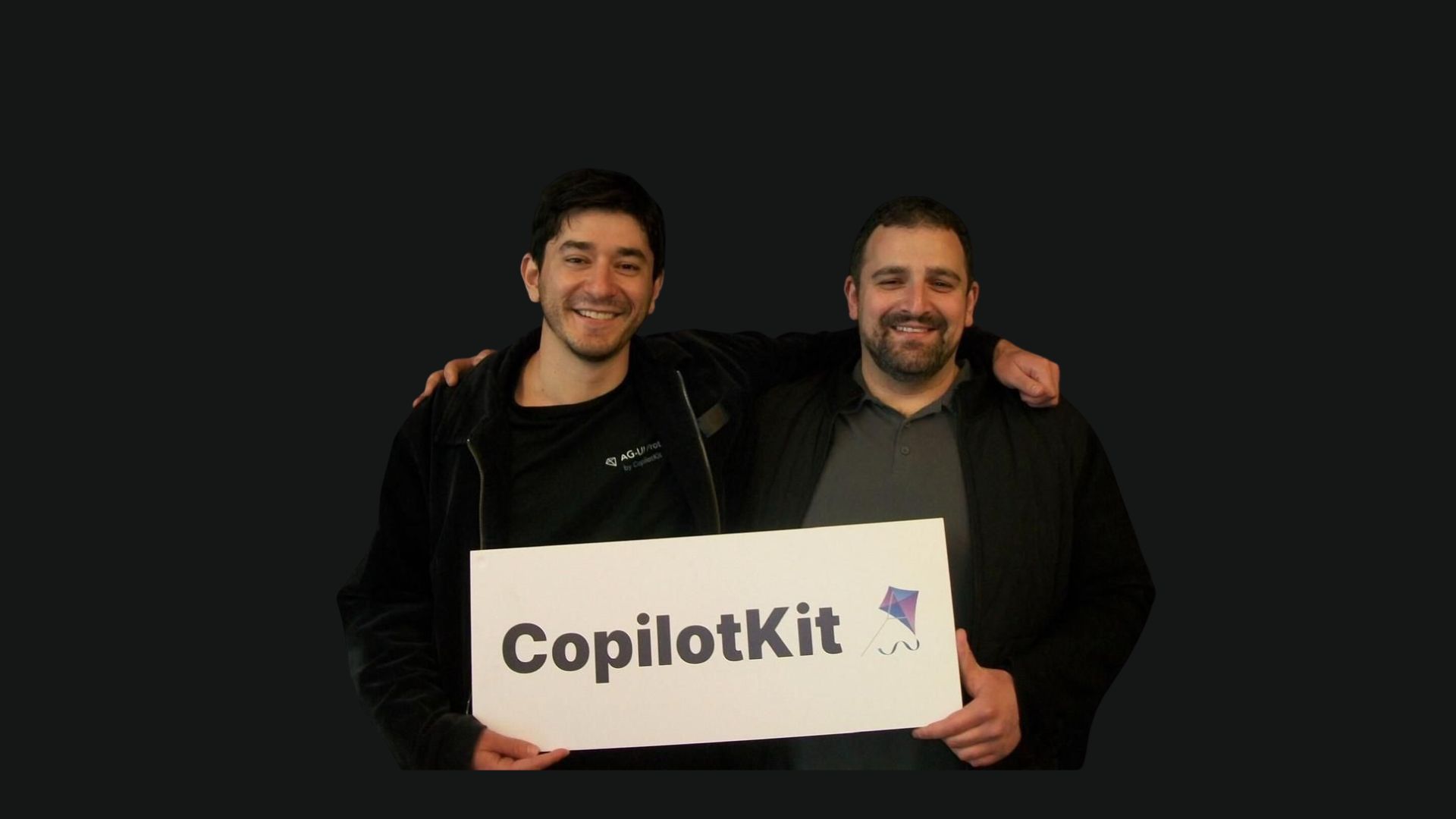
CopilotKit, founded by Israeli brothers Atai Barkai and Uli Barkai, has raised a total of $27 million, including $20.5 million in a Series A round and $6.5 million in Seed funding.

Akamai Technologies has announced that it has entered into a definitive agreement to acquire Israeli browser-based AI usage control and secure enterprise browser company LayerX for $205 million

CopilotKit first came to our attention not through a pitch, but through something we pay close attention to as a fund: organic developer adoption. We regularly track emerging open-source projects gaining traction in developer communities, and CopilotKit’s growth curve stood out, developers were pulling it into their stacks, raving about the simple yet powerful new layer for agent-to-user interactions, and the project’s growth pace suggested it was solving a real and urgent problem.

When we met co-founders (and brothers) Atai and Uli Barkai, we were immediately struck by their clarity of vision for agentic-human interfaces in an AI-powered world. But what truly set CopilotKit apart was the speed at which they turned open-source momentum into a commercial business, always the hardest challenge for developer-first companies. Within months, Fortune 500 enterprises were paying meaningful dollars for CopilotKit’s early enterprise offering, and revenue was growing rapidly. It’s one thing to build something developers love. It’s another entirely to make that love monetizable. CopilotKit did both, remarkably fast.
Agents Need a New User-Interface Layer

For the past decade, software interfaces followed a simple model: a frontend talks to a backend, the backend replies with data, the frontend renders the reply. A stateless ping-pong, no persistence, no learning, no adaptation. AI agents break that model entirely. They stream responses, pause for human input, resume across sessions, generate dynamic UI elements on the fly, and orchestrate complex multi-step workflows. They produce continuous, stateful, interactive experiences, and the old frontend stack simply wasn’t built for any of that.

Every company embedding AI agents into its products today is discovering the same thing: the hardest part isn’t building the agent, it’s building the interaction layer between the agent and the human user, while avoiding lock-in to a specific agentic backend framework. How does the agent surface its work? How does the user steer, correct, or approve? How does this all persist across sessions, devices, and workflows? And how does the organization track and analyze user interactions with agents? Before CopilotKit, teams were forced to reinvent this layer from scratch – every time, for every frontend, and with every agentic backend they use, at enormous cost and with limited results.

AG-UI and the CopilotKit Stack

What we loved about CopilotKit was their insight that the agent-to-user interface is not an application problem ,it’s an infrastructure problem. Just as MCP became the universal standard for connecting agents to external tools, CopilotKit is building the equivalent standard for connecting agents to users.

At the core of this is AG-UI, an open protocol created by CopilotKit that defines how agentic backends communicate with modern frontends. AG-UI is the third leg of what is becoming the agentic protocol stack: MCP connects agents to existing software tools, A2A interconnects agents between themselves, and AG-UI connects these agents to human users. Instead of every application building its own bespoke agent-user interface, AG-UI provides a universal language, each backend framework implements the protocol once, and all applications can then work independently of the backend with a rich agentic user experience.

The ecosystem’s response was extraordinary. Google, Microsoft, Amazon, and Oracle have all integrated AG-UI into their own agent frameworks, and officially endorsed CopilotKit for enterprises building agentic products. Leading open-source agent frameworks, LangChain, LlamaIndex, Mastra, PydanticAI, Agno, have aligned to and implemented the AG-UI protocol. In a fragmented, fast-moving ecosystem where standards rarely emerge this early, CopilotKit has become the neutral, trusted layer for agent-user interaction that everyone is building on. That kind of ecosystem convergence is rare, and it doesn’t happen by accident. We were sold.

Why Glilot+? Why Now?

At Glilot, we’ve spent over a decade investing in the infrastructure layers that define how enterprises build and secure software, from cybersecurity and cloud infrastructure to developer tools and DevOps. CopilotKit sits squarely at the intersection of these themes. It’s not an AI application; it’s the infrastructure that enables every AI application to interact with its users. That distinction matters, because infrastructure compounds in ways that applications don’t.

We also made a deliberate bet on timing. The agentic era is arriving faster than most enterprises are prepared for, and CopilotKit is giving them the building blocks to ship agent-powered products without reinventing a critical layer of the new agentic stack. The rare combination of rapid open-source adoption and an enterprise offering that converted into meaningful revenue almost immediately signals genuine product-market fit, not just developer enthusiasm, making this investment a perfect fit for Glilot+.

We’re proud to lead CopilotKit’s $27M Series A alongside our colleagues from NFX and SignalFire, and support the company’s fast growth across the US and globally. Atai, Uli, and the entire CopilotKit team are building what we believe will become a foundational infrastructure layer of the software stack for years to come, and we couldn’t be more excited to be part of this journey.

ScaleOps, an autonomous cloud and AI infrastructure resource management platform, has raised $130 million at a valuation of more than $800 million.

For the past year, the same massive challenge has been looming over the AI revolution: the exponential growth of AI compute is on a collision course with the physical limits of the power grid.

As data centers race to scale, the gap between how AI software behaves and what physical infrastructure can handle is widening rapidly. Historically, the industry has treated power as a static constraint and compute as a separate world entirely. But as this ecosystem grows into a multi-trillion-dollar market, we can no longer afford the disconnect between energy and compute.

That disconnect was hard to ignore as an investor.

When I first encountered Niv-AI, what stood out immediately was what they were not trying to do. They weren’t building just another monitoring dashboard or adding bulky hardware to an already stressed supply chain. Instead, they recognized that to solve a problem this large, the energy layer and the compute layer desperately need a shared dialect to communicate.

That framing mattered. It shifted the conversation away from treating power as a limitation, and toward treating it as an intelligent, software-defined ecosystem. Niv-AI acts as a critical control plane sitting exactly at the intersection of energy and compute. By doing so, they aren’t just solving a point-in-time issue; they are building the foundational infrastructure required for the global AI ecosystem to scale without breaking the physical grid.

True consolidation and category creation rarely come from staying within traditional industry silos. They come from operating directly in the white space between them.

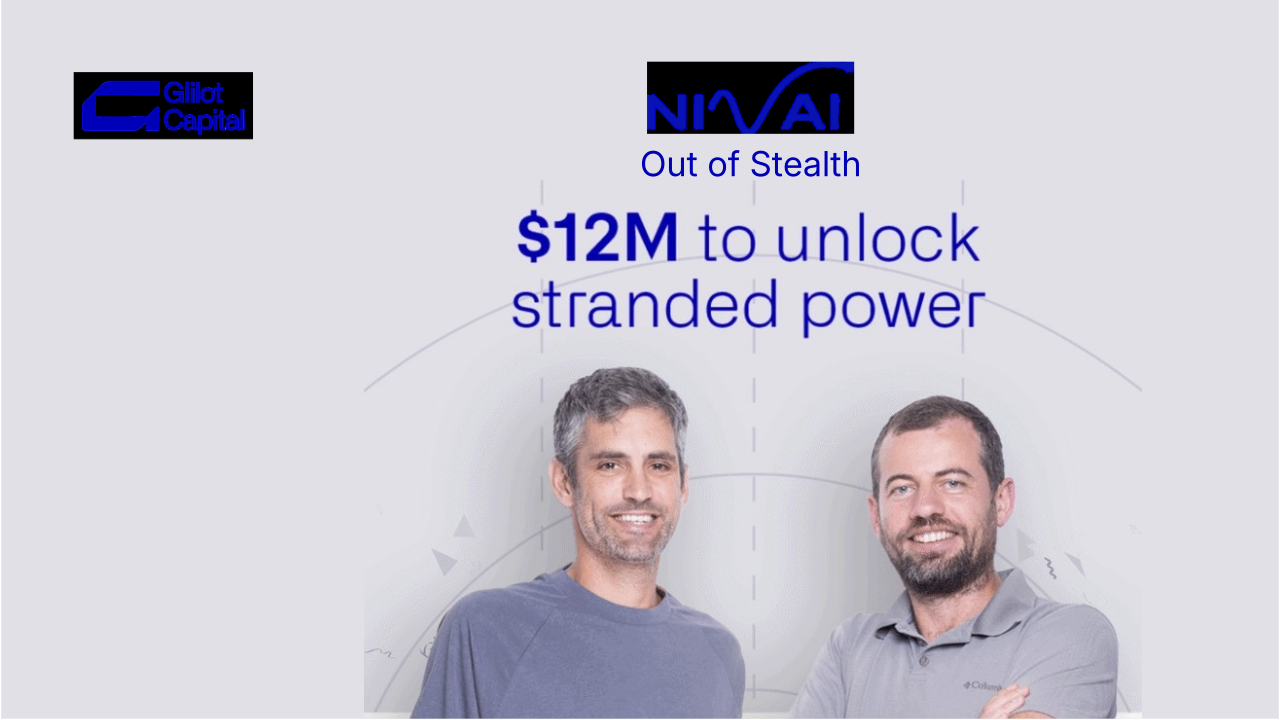
The technology alone would have been compelling, but what ultimately sealed my conviction was the team. Tomer and Eddie bring a rare advantage to this problem. Drawing on their deep operational and technical backgrounds in elite intelligence units, they possess the exact bare-metal and systems-level expertise needed to orchestrate complex challenges at the microsecond level. They were unusually clear about what it takes to solve this from first principles, with no trend-chasing and no noise.

Glilot Capital co-led Niv-AI’s $12M Seed round together with Lior Handelsman from Grove Ventures. Lior, a co-founder of SolarEdge, is a world-class expert who shares our conviction in this vision. We chose to invest because we believe the company brings the physical infrastructure of AI closer to reality – both technically and culturally. The AI revolution can only fulfill its promise if it is grounded in the reality of physics.

Niv-AI represents exactly that kind of breakthrough. We believe these are the moments that create lasting companies and drive meaningful category shifts.

Loading more blogs...

For most of venture history, a billion-dollar valuation was the reward for years of scaling an organization. You raised, you hired, you grew, you crossed the line, somewhere between 300 and 800 people, somewhere between year six and year ten.

Then 2022 Happened

A new species of company appeared. Young enough to still be in the seed-stage on paper. Tiny enough to fit around a small office. Already worth a fortune. I’ve been tracking the pattern for two years, and I think it deserves its own name.

I’m calling them “micro-unicorns”.

What is a Micro-Unicorn?

A micro-unicorn is a company that reaches a $1B+ valuation with fewer than 100 employees, within two years of founding. With all three conditions measured at the moment it became a unicorn.

The definition matters more than it looks. Three dimensions collapse at once: it is young, it is tiny, and it is already worth a fortune. Lose any one of them and you don’t have a micro-unicorn, you have a fast unicorn, or a small unicorn, or a unicorn.

The “at the moment of crossing” rule does real work. A company that hit $1B with 200 people and later cut down to 70 is not a micro-unicorn, it just became smaller with time. We measure at the snapshot when the line was crossed, because that snapshot is the actual physical evidence that something changed in the math of building a company.

In our dataset, out of 961 unicorns analyzed, 32 companies meet the full definition. 26 of those were founded in the AI era (2022+). That cohort of 26 is the population this essay is about.

How We Counted

This isn’t vibes. It’s a systematic study of every venture-backed company that has reached $1B since January 2010.

  • PitchBook – full pull of 961 unicorn companies, with valuations, employee histories, capital raised, and investor rolls.
  • Dealigence – round-level deal data and headcount tracking.
  • Primary research – direct verification of edge cases and recent rounds.

Timeframe: January 2010 through June 2026, which is basically when the world began to spin for this capital era.

Sources are linked at the bottom of this piece. If you want to dig into the underlying data, ping me.

The Honorary Class

A handful of pioneers took slightly longer than two years to cross $1B but did so lean, and they led the way. They don’t fit the strict definition. They get named anyway, because they’re the proof points the rest of the cohort is built on: Cursor, Magic.dev, Zyphra, and even the Israeli DoubleAI (AAI).

You can argue about the 24-month cutoff. You can’t argue that these four didn’t change what the industry thought possible.

★ The Leaderboard

Seven flagship micro-unicorns, ordered by team size at $1B.

  • Inflection AI – 7 employees at $1B · $176M value/employee when becoming a micro-unicorn · $4B current valuation
  • Safe Superintelligence (“SSI”) – 10 employees at $1B · $500M value/employee when becoming a micro-unicorn · $32B current valuation
  • Cursor (honorary) – 29 employees at $1B · $86M value/employee when becoming a micro-unicorn · $60B current valuation
  • Skild AI – 44 employees at $1B · $34M value/employee when becoming a micro-unicorn· $14B current valuation
  • Physical Intelligence — 46 employees at $1B · $52M value/employee when becoming a micro-unicorn· $11B current valuation
  • Cognition — 50 employees at $1B · $40M value/employee when becoming a micro-unicorn· $26B current valuation
  • Poolside – 62 employees at $1B · $48M value/employee when becoming a micro-unicorn · $14B current valuation

Five years ago, these figures were a typo. Today it’s reality.

What the Data Shows

1. The AI Era is Different. By a lot

Time-to-unicorn has fallen from roughly a decade (2013 cohort) to under one year (2025). Team size at crossing has trended down to a median of 27 employees for the 2025 cohort.

  • 81% of all micro-unicorns were founded in the AI era (2022 or after). And actively looking for one in Israel is a challenge that I accept.
  • 50% of them were founded in 2025 alone – 13 companies in one year, more than the entire 2010–2021 period combined.
  • AI-era average time to $1B is 1.7 years. For every other company founded between 2010–2021, it was 5.1 years.

The micro-unicorn barely existed before 2022. Now it’s emerging.

2. Time is Shrinking. So Are the Teams

Time-to-unicorn has collapsed from roughly a decade for the 2013 cohort to under a year for 2025. Median team size at crossing for the 2025 cohort: 27 employees.

This is not a marginal compression. This is a category change.

3. Segmentation: What These Companies Actually Do

69% of the micro-unicorns are pure AI plays, led by scientists. Here is the breakdown:

  • Frontier model labs – 42% share · $4.5B median valuation
  • Robotics – 15% share · $7.2B median valuation
  • AI infrastructure & chips – 12% share
  • Dev tools – 8% share · $20B median valuation
  • AI agents – 8% share
  • Others – 12% share

Robotics is the strongest broad segment. Dev tools show the highest median but on a tiny sample, be careful with that number. For models, the $4.5B median is the honest figure; the average is inflated by SSI at $32B.

4. Geography: Almost a One-City Story

Of 26 micro-unicorns: 25 are US-based and 19 of them are in the San Francisco Bay Area (and one from the UK). That concentration is the single biggest opening for every ecosystem that isn’t the Bay Area. We’ll come back to this.

5. Micro-Unicorns vs. All 961 Unicorns: The Core of the Thesis

These are the metrics that matter. Everything else is supporting evidence.

  • Median employees — All 961 unicorns: 400 · 26 micro-unicorns: 34 · ~12× leaner
  • Median valuation — All 961 unicorns: $1.97B · 26 micro-unicorns: $4.00B · 2× higher
  • Median value / employee — All 961 unicorns: $5.5M · 26 micro-unicorns: $118M · ~21×

The median unicorn generates $5.5M of value per employee. The median micro-unicorn generates $118M. That is more than 20x the leverage.

6. Exits: The Leverage Shows Up at the Finish Line Too

Five recent acquisitions of micro-unicorn-shaped companies:

  • Cursor – acquired by SpaceX · Jun 2026 · $60B exit · 700 employees · $86M/employee
  • xAI – acquired by SpaceX · Feb 2026 · $250B exit · 4,900 employees · $51M/employee
  • io Products – acquired by OpenAI · May 2025 · $6.5B exit · 55 employees · $118M/employee
  • GenMat – acquired by Comstock · Oct 2024 · $2.76B exit · 12 employees · $230M/employee
  • Tabular – acquired by Databricks · Jun 2024 · $1.0B exit · 39 employees · $26M/employee

Median exit value per employee is ~$86M. Orders of magnitude above conventional M&A.

What is the buyer actually buying? In frontier AI, an acquisition at this stage is rarely about revenue or the product. It’s a pure talent and market share play. The price reflects the scarcity of the scientists and the value of denying them to rivals. That is precisely why a pre-revenue 12-person company can command billions. io Products (acquired by OpenAI) and the SpaceX–xAI consolidation are pure talent acquihires.

7. Employee Efficiency

  • $80M – median valuation per current employee.
  • $118M – median valuation per employee at the $1B moment.
  • 15–21× – leverage vs. the 961-unicorn population’s $5.5M baseline.

A note on revenue-per-employee: PitchBook discloses revenue for almost none of this cohort, because most are pre-revenue frontier labs priced on capability.

8. Who Backs the Micro-Unicorns: The Single Most Striking Number

Across the 26 companies, there are 455 unique investors. The cohort is top-heavy with 9 VCs and 3 individuals across all micro-unicorns. And the most prolific backer is not a venture firm: Nvidia is invested in 11 of the 26 micro-unicorns. The computer supplier whose chips these companies run on is also their most prolific investor, financing the ecosystem that drives its own demand. We’ll come back to what that means in the risks section.

Counterpoint · Threats & Risks

The bullish case is strong. A credible internal view has to hold both sides. Three structural risks could blunt the thesis and each follows directly from the very traits that make these companies remarkable.

  1. Underwriting Capability, Not Execution – Venture capitalists value what a company could become. Customers value what it is today. The micro-unicorn’s valuation is built on the former, a tiny team’s potential. But durable revenue depends on the latter. What enterprise customers want is an enterprise-grade vendor: reliability, security, SLAs, account management, roadmaps that survive a key departure, and the middle-management layer that an enterprise relationship actually runs on: people to own accounts, manage delivery, handle escalations, and translate a research team’s output into a supported product. These are the two things a 20-person company definitionally lacks.
  2. Talent Density Is Also Talent Concentration – The micro-unicorn runs on a thin layer of exceptional people, and that same layer circulates through the same companies in the same place. Founders and early teams come overwhelmingly from a handful of labs (OpenAI, DeepMind, Anthropic, Meta FAIR) and a single metro (the Bay Area). When value is concentrated in so few people, the firm is acutely exposed to talent migration. A departing founder or poached research lead can move a meaningful fraction of the company’s worth to a competitor overnight. We have already seen it, Inflection’s team to Microsoft, Adept’s founders to Amazon. Leverage per employee cuts both ways. The higher it is, the more fragile the company is to losing any one person.
  3. The Closed-Loop Market – This is the one nobody likes to say out loud. Nvidia is the most prominent investor in this cohort (11 of 26) and the dominant supplier of the compute every one of these companies depends on. Capital flows from Nvidia into the micro-unicorns. Much of it flows back as GPU spend. That is a closed loop. It can inflate demand in a self-reinforcing circle. It echoes vendor-financing dynamics that have preceded past tech corrections. If frontier-compute economics shift, a cohort financed inside that loop is exposed in a way diversified, customer-revenue-funded companies are not.


Bloomberg Oct 2025 — the AI money loop

The Israeli Opportunity

The geography paragraph is the one I keep coming back to. That is not a verdict on the rest of the world. That is an unclaimed territory. And the traits the micro-unicorn rewards map unusually well onto Israel’s structural strengths.

Why Israel Is Structurally Positioned

  1. The Micro-Unicorn Rewards Talent Density Over Headcount. Israel’s defining export is high-density technical talent trained under constraints, not from one unit, but from a whole pipeline: Unit 8200, Mamram, Talpiot, Unit 81 and Unit 9900, the Air Force and Naval tech corps. These units train engineers to ship production systems in tiny teams, years before peers finish university.
  2. The Capital Is Already Pointed at the Right Segments. In 2025, 70% of Israeli tech capital went into cyber and AI, exactly where micro-unicorns form.
  3. The Ecosystem Has Proven Extraordinary Resilience. Across 2024–2025, through war and mobilization, Israeli tech delivered a record ~$80B in exits in 2025, fundraising near the 2021 peak, and rising founder optimism.
  4. The Moat Thesis Fits the Israeli Playbook. “If your moat is code, you have no moat.” That points the advantage toward proprietary data, deep workflow integration, infra and cyber — historically Israel’s strongest categories.

”The one-person unicorn is still half a joke. But the sub-100-employee unicorn is already here, and in five years it will be the default, not the exception.” – me, on stage, last month.

The Gap Israel Needs to Fill

Israel is producing AI-era unicorns at remarkable speed and none of them are micro-unicorns (except some unofficial announcements and rumors). Every recent Israeli unicorn founded 2022 or later crossed $1B only after scaling past 100 employees or took longer than two years. The fastest pattern we see is a company that sits in the 30 to 60 employee range for most of its life and then jumps past 100 in the months before the $1B round closes. One name came within sixty days of being a micro-unicorn and crossed at 120 instead. Israel has the speed. Israel has the AI focus. Israel should become the new micro-unicorn producer.

That gap is the opportunity. We name it, then we own it.

What Israel Needs To Do Next

The Bay Area’s micro-unicorns are not magic. They’re a repeatable formula: a tiny team of world-class AI scientists, frontier compute, and capital priced on capability. Israel can run that formula — but only if it builds the one input it is shorter on: depth in frontier AI research talent.

  1. Grow AI Scientists in the Academy. Expand graduate-level AI/ML research capacity, retain researchers who leave for US labs, and tighten the academia-to-startup pipeline so a PhD’s research becomes a company, fast.
  2. Grow AI Practitioners Inside the IDF. The elite units (8200, Mamram, 81) already produce the world’s best applied engineers. Make them frontier AI-native – training to build and fine-tune models, run large-scale training, and ship AI research, so alumni leave as model builders, not as engineers. This is the highest-leverage move: it scales the exact talent the micro-unicorn needs, through an institution Israel already excels at.
  3. Import the Playbook Explicitly. Price first rounds for capability the way US investors do. Build or attract frontier-compute access domestically — and the strategic-compute capital that is currently absent from Israeli rounds. Back tiny, scientist-led teams at seed rather than waiting for headcount and traction.

What’s Next?

This is the part where Medium essays usually wind down to a polite “thanks for reading.” Not this one.

I want to invest in one of the first Israeli micro-unicorns.

A team under 100. Founded 2024 or later. Built around a small group of frontier-AI talent, researchers and not only engineers. The kind of company that would look right at home in the Bay Area, except it’s coming out of Tel Aviv, Haifa, or Be’er Sheva.

If you are building this, or know the people who are, reach out.


CopilotKit first came to our attention not through a pitch, but through something we pay close attention to as a fund: organic developer adoption. We regularly track emerging open-source projects gaining traction in developer communities, and CopilotKit’s growth curve stood out, developers were pulling it into their stacks, raving about the simple yet powerful new layer for agent-to-user interactions, and the project’s growth pace suggested it was solving a real and urgent problem.

When we met co-founders (and brothers) Atai and Uli Barkai, we were immediately struck by their clarity of vision for agentic-human interfaces in an AI-powered world. But what truly set CopilotKit apart was the speed at which they turned open-source momentum into a commercial business, always the hardest challenge for developer-first companies. Within months, Fortune 500 enterprises were paying meaningful dollars for CopilotKit’s early enterprise offering, and revenue was growing rapidly. It’s one thing to build something developers love. It’s another entirely to make that love monetizable. CopilotKit did both, remarkably fast.

Agents Need a New User-Interface Layer

For the past decade, software interfaces followed a simple model: a frontend talks to a backend, the backend replies with data, the frontend renders the reply. A stateless ping-pong, no persistence, no learning, no adaptation. AI agents break that model entirely. They stream responses, pause for human input, resume across sessions, generate dynamic UI elements on the fly, and orchestrate complex multi-step workflows. They produce continuous, stateful, interactive experiences, and the old frontend stack simply wasn’t built for any of that.

Every company embedding AI agents into its products today is discovering the same thing: the hardest part isn’t building the agent, it’s building the interaction layer between the agent and the human user, while avoiding lock-in to a specific agentic backend framework. How does the agent surface its work? How does the user steer, correct, or approve? How does this all persist across sessions, devices, and workflows? And how does the organization track and analyze user interactions with agents? Before CopilotKit, teams were forced to reinvent this layer from scratch – every time, for every frontend, and with every agentic backend they use, at enormous cost and with limited results.

AG-UI and the CopilotKit Stack

What we loved about CopilotKit was their insight that the agent-to-user interface is not an application problem ,it’s an infrastructure problem. Just as MCP became the universal standard for connecting agents to external tools, CopilotKit is building the equivalent standard for connecting agents to users.

At the core of this is AG-UI, an open protocol created by CopilotKit that defines how agentic backends communicate with modern frontends. AG-UI is the third leg of what is becoming the agentic protocol stack: MCP connects agents to existing software tools, A2A interconnects agents between themselves, and AG-UI connects these agents to human users. Instead of every application building its own bespoke agent-user interface, AG-UI provides a universal language, each backend framework implements the protocol once, and all applications can then work independently of the backend with a rich agentic user experience.

The ecosystem’s response was extraordinary. Google, Microsoft, Amazon, and Oracle have all integrated AG-UI into their own agent frameworks, and officially endorsed CopilotKit for enterprises building agentic products. Leading open-source agent frameworks, LangChain, LlamaIndex, Mastra, PydanticAI, Agno, have aligned to and implemented the AG-UI protocol. In a fragmented, fast-moving ecosystem where standards rarely emerge this early, CopilotKit has become the neutral, trusted layer for agent-user interaction that everyone is building on. That kind of ecosystem convergence is rare, and it doesn’t happen by accident. We were sold.

Why Glilot+? Why Now?

At Glilot, we’ve spent over a decade investing in the infrastructure layers that define how enterprises build and secure software, from cybersecurity and cloud infrastructure to developer tools and DevOps. CopilotKit sits squarely at the intersection of these themes. It’s not an AI application; it’s the infrastructure that enables every AI application to interact with its users. That distinction matters, because infrastructure compounds in ways that applications don’t.

We also made a deliberate bet on timing. The agentic era is arriving faster than most enterprises are prepared for, and CopilotKit is giving them the building blocks to ship agent-powered products without reinventing a critical layer of the new agentic stack. The rare combination of rapid open-source adoption and an enterprise offering that converted into meaningful revenue almost immediately signals genuine product-market fit, not just developer enthusiasm, making this investment a perfect fit for Glilot+.

We’re proud to lead CopilotKit’s $27M Series A alongside our colleagues from NFX and SignalFire, and support the company’s fast growth across the US and globally. Atai, Uli, and the entire CopilotKit team are building what we believe will become a foundational infrastructure layer of the software stack for years to come, and we couldn’t be more excited to be part of this journey.

For the past year, the same massive challenge has been looming over the AI revolution: the exponential growth of AI compute is on a collision course with the physical limits of the power grid.

As data centers race to scale, the gap between how AI software behaves and what physical infrastructure can handle is widening rapidly. Historically, the industry has treated power as a static constraint and compute as a separate world entirely. But as this ecosystem grows into a multi-trillion-dollar market, we can no longer afford the disconnect between energy and compute.

That disconnect was hard to ignore as an investor.

When I first encountered Niv-AI, what stood out immediately was what they were not trying to do. They weren’t building just another monitoring dashboard or adding bulky hardware to an already stressed supply chain. Instead, they recognized that to solve a problem this large, the energy layer and the compute layer desperately need a shared dialect to communicate.

That framing mattered. It shifted the conversation away from treating power as a limitation, and toward treating it as an intelligent, software-defined ecosystem. Niv-AI acts as a critical control plane sitting exactly at the intersection of energy and compute. By doing so, they aren’t just solving a point-in-time issue; they are building the foundational infrastructure required for the global AI ecosystem to scale without breaking the physical grid.

True consolidation and category creation rarely come from staying within traditional industry silos. They come from operating directly in the white space between them.

The technology alone would have been compelling, but what ultimately sealed my conviction was the team. Tomer and Eddie bring a rare advantage to this problem. Drawing on their deep operational and technical backgrounds in elite intelligence units, they possess the exact bare-metal and systems-level expertise needed to orchestrate complex challenges at the microsecond level. They were unusually clear about what it takes to solve this from first principles, with no trend-chasing and no noise.

Glilot Capital co-led Niv-AI’s $12M Seed round together with Lior Handelsman from Grove Ventures. Lior, a co-founder of SolarEdge, is a world-class expert who shares our conviction in this vision. We chose to invest because we believe the company brings the physical infrastructure of AI closer to reality – both technically and culturally. The AI revolution can only fulfill its promise if it is grounded in the reality of physics.

Niv-AI represents exactly that kind of breakthrough. We believe these are the moments that create lasting companies and drive meaningful category shifts.

Imagine a CISO’s desk. It isn’t buried under paper. It’s buried under dashboards.

Tabs are always open. Alerts blinking. Emails are flagged and slack channels buzz constantly. Meanwhile, another vendor asks for 30 minutes to “show something groundbreaking.” The modern enterprise security environment isn’t a clean architecture diagram; it’s a fragmented battlefield of dozens of products and multiple consoles. It is defined by overlapping capabilities, endless integrations and constant maintenance.

This is the first reality vendors must face: Tool Fatigue. The CISO is not looking for another product; they  are looking for relief. When a vendor proudly declares, “We detect 25% more advanced threats,” the CISO doesn’t hear innovation. They hear  another system to deploy, another dashboard to monitor, and another contract to justify.

Maximizing Cybersecurity ROI

In today’s digital economy, cybersecurity has transitioned from a back-office technical expense to a core pillar of business resilience. As global cybersecurity spending is projected to reach $240 billion in 2026, corporate boards and C-suite executives are demanding answers to a critical question: How much actual security are we getting for every dollar we spend?

For years, organizations operated under a “more is better” mindset, buying tools based on fear and worst-case scenarios. However, to truly optimize, they must adopt security investments, leaders must abandon fear-driven spending. Instead adopt data-driven frameworks that prove risk reduction and return on investment (ROI).

The Complexity Trap: Why More Spending Doesn’t Always Mean More Security

The high volume of security solutions in the modern enterprise has led to diminishing returns. Organizations currently juggle an average of 83 different security tools from 29 different vendors. In large global enterprises with over 25,000 employees, about 25% manage a bloated portfolio exceeding 100 distinct security products.

Rather than making companies safer, this tool sprawl creates a “Complexity Trap”. Fragmented tools and disconnected data force security analysts to pivot across an average of 10.9 different consoles, which slows down investigations and creates dangerous blind spots. As a result, 46% of alerts are false positives, and 42% are never investigated due to alert fatigue and manual work. In short, acquiring redundant, niche solutions often adds operational friction rather than improving defensive defense.

Shifting to Risk-Spend Efficiency (RSE)

To ensure every dollar matters, organizations are turning to Risk-Spend Efficiency (RSE). This is a framework that calculates exactly how much risk is reduced for every dollar invested in mitigation. RSE enables decision-makers to make apples-to-apples comparisons across different projects, such as comparing the value of an infrastructure upgrade against a cybersecurity training program.

Calculating ROI for risk reduction,requires comparing the financial cost of a potential risk against the cost of implementing a control. For example, if an organization expects five phishing attacks a year costing $35,000 each, but the cost to train employees to spot these attacks is only $25,000, the investment makes clear financial sense. By translating complex risk trade-offs into financial terms, RSE ensures that limited resources go toward the initiatives that have the highest impact.

Speaking the Board’s Language: Cyber Risk Quantification (CRQ)

To secure budgets and align with leadership, Chief Information Security Officers (CISOs) must stop speaking in technical jargon and arbitrary metrics. Board members are frustrated by traditional, color-coded “heatmaps” that show a risk as “yellow” quarter after quarter without explaining the financial implications or what has actually changed.

Instead, mature organizations are adopting Cyber Risk Quantification (CRQ) models, such as the Factor Analysis of Information Risk (FAIR) standard, to express cyber risk in monetary values. Through formal Business Impact Analysis (BIA), organizations can evaluate what happens if a critical system fails or is manipulated, quantifying the maximum credible loss. Framing risk in financial terms allows boards to prioritize the most critical threats, evaluate the cost-benefit of security investments, and track how much risk was reduced over time.

Proving ROI Through Validation and Platformization

To optimize the cybersecurity budget, organizations must actively validate that their investments are working. Adversarial Exposure Validation (AEV) is replacing periodic vulnerability scanning by continuously testing security controls against real-world attack techniques. Instead of relying on theoretical vulnerability scores that may not reflect real danger, AEV helps organizations prioritize exposures based on actual exploitability. This identifies underperforming tools and allows lean security teams to focus exclusively on the threats that matter most.

Simultaneously, the market is moving toward “platformization,” consolidating separate tools into integrated security platforms. Consolidating tools significantly reduces the time it takes to identify and mitigate security incidents.

Conclusion

As cyber threats grow more sophisticated, budgets can no longer be justified by fear, hype, or arbitrary compliance checklists. The future of cybersecurity management relies on proving value. By using Risk-Spend Efficiency into strategic planning, leveraging CRQ to communicate with the board, and consolidating tools to reduce operational drag, organizations can confidently answer exactly how much security they are getting for every dollar spent.

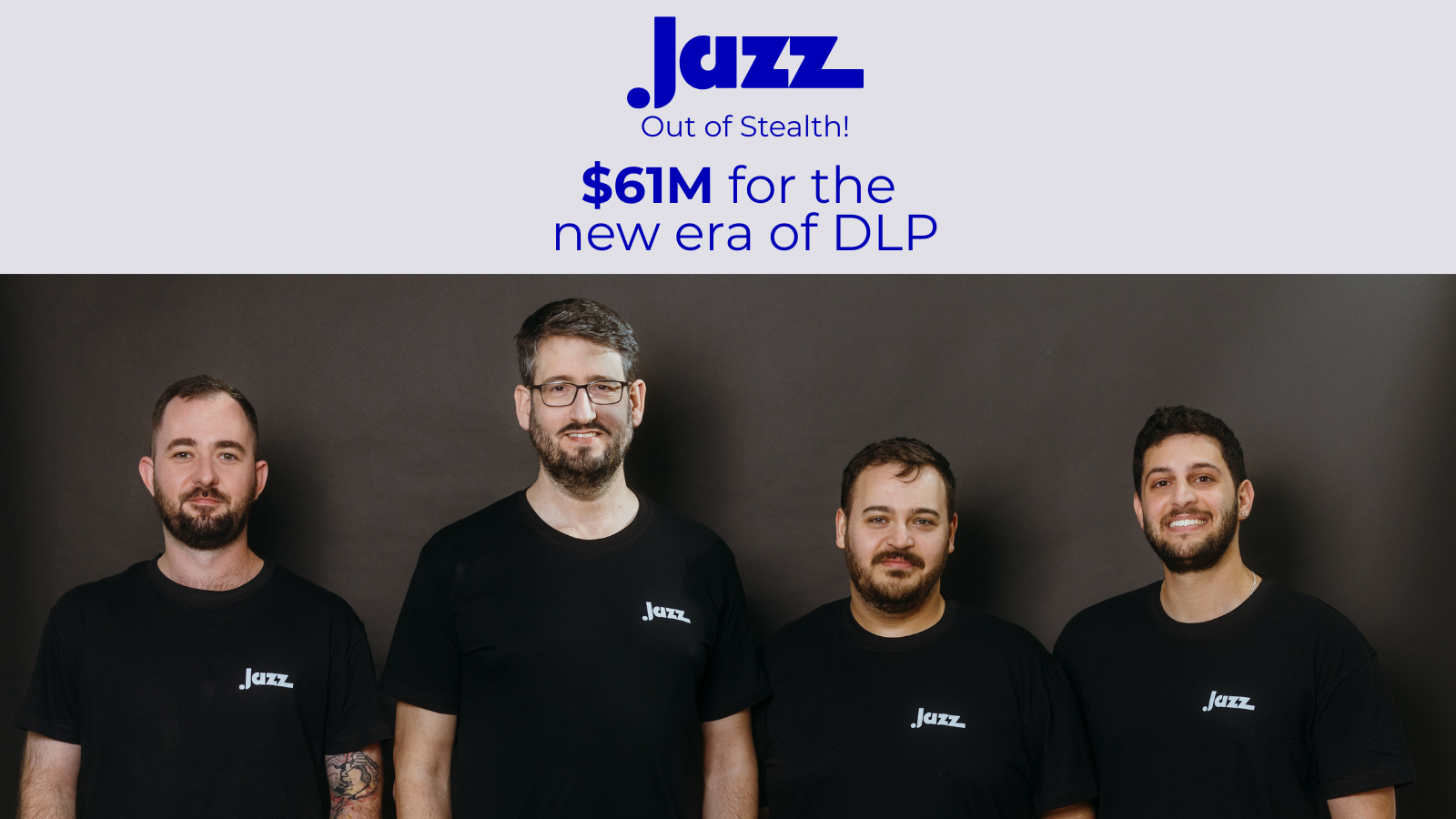
Glilot Capital recently led a $61M round for Jazz because the market is ready for a fundamental platform shift.

This investment isn’t just about a new tool; it’s about backing a team that is finally solving the core problem of data risk. 

For years, I watched security teams fight a battle they couldn’t win in Data Loss Prevention (DLP). They’ve been trapped in a cycle of drowning in alerts from tools that flag every policy violation but lack the context to identify actual risk.

The industry’s answer was always the same: more rules, more tuning, more noise. We accepted that DLP was destined to be a noisy, high-friction compliance checkbox relying on overworked analysts to guess the business context behind machine generated alerts. The noise floor rose, burnout became a feature, not a bug, and the actual risk of data loss never really moved.

That disconnect was impossible to ignore as an investor. 

When I first met the team at Jazz,. They weren’t pitching slightly better classification or flashier. dashboards. Instead,  they presented a radical shift: a DLP system built to understand the organization it protects.

This moves the conversation from pattern matching to true intent. While modern competitors apply a thin layer of AI to the same broken, rule-based framework, Jazz replaces guesswork with ground truth. It asks the only question that matters: Why is this data moving, and what does that mean for the business? 

The technology is game-changing, but the team sealed the deal. Ido, Jake, Yonatan, and Noam refused to build more of the same. No more brittle rules. No more alert storms. No more forcing security teams to choose between protecting data and breaking the business. Their discipline was evident in every conversation. They moved past the broken status quo to build a system grounded in how business actually works.

That clarity resonated deeply in our discussions with CISOs. Many had felt the same frustration for years but lacked a viable alternative. What stood out was that the founders didn’t just have a pitch; they shared the customer’s pain. There was no over-selling, no trend-chasing, just an honest diagnosis of a broken system and a credible path to fixing it.

In a world of SaaS, remote work, and GenAI, static rules are obsolete. We are witnessing a “perfect storm” in the cyber domain, where AI has acted as the ultimate catalyst, drastically accelerating the movement of data while simultaneously shattering traditional defense frameworks. Glilot Capital led the Jazz round because we believe real security comes from understanding reality, not just writing more policies. Jazz isn’t just an iteration, it’s the breakthrough the category has been waiting for.

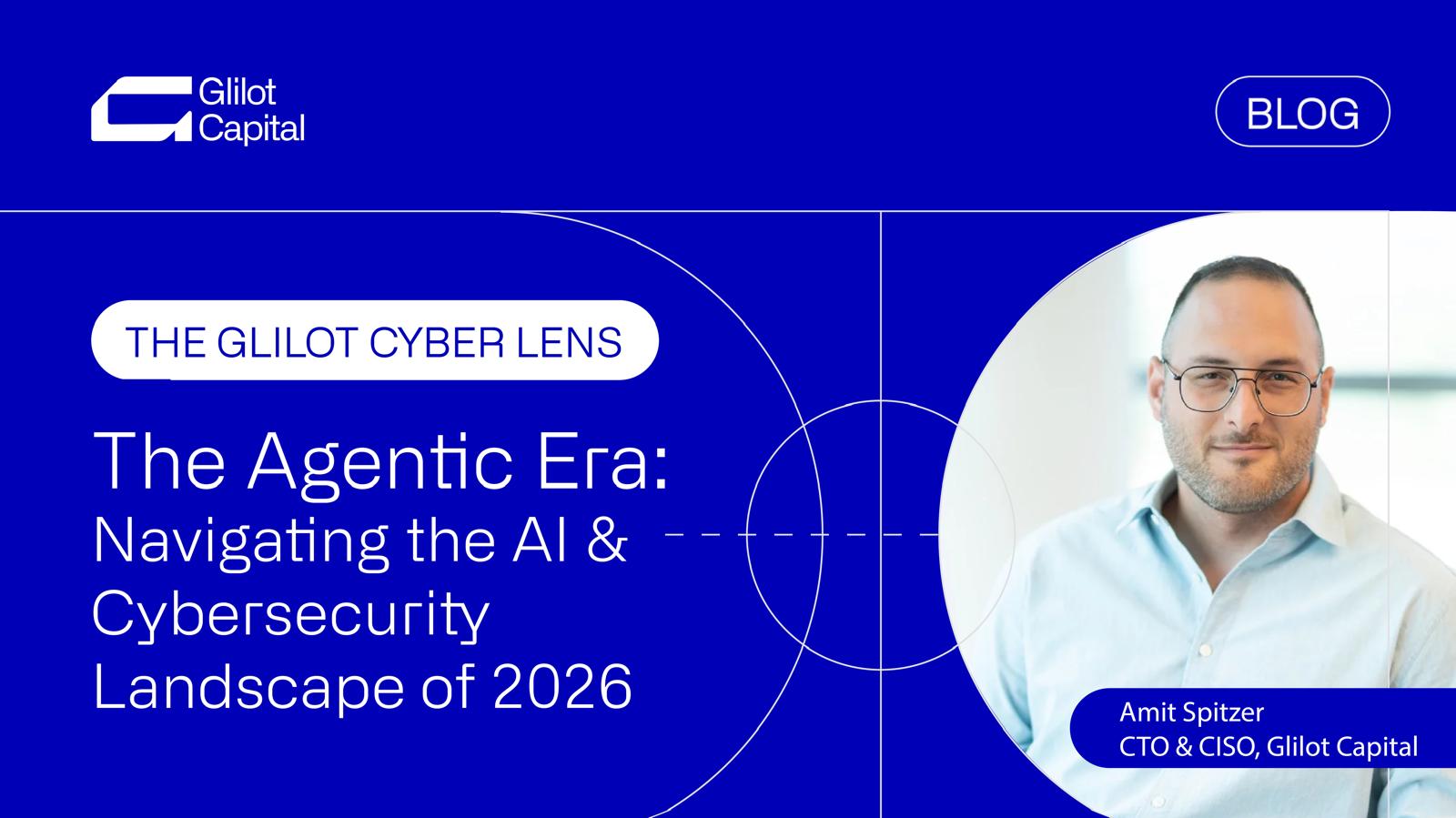
If 2025 was the year everyone experimented with AI, 2026 is the year no one can pretend it’s still a side project. We’ve crossed a quiet but irreversible threshold: the shift from an AI-assisted economy to an AI-native one.

This is no longer about chatbots that summarize emails or draft code snippets. The dominant actors of 2026 are autonomous AI agents, digital entities that can reason, plan, make decisions, and execute complex workflows with little to no human supervision. In practice, that means AI is no longer just advising us. It is doing the work.

The productivity upside is enormous. But so is the blast radius when something goes wrong.

From Tools to a Digital Workforce

The defining story of 2026 is what many are already calling the Agentic Pivot. Organizations are no longer merely adopting new tools. They are managing a parallel, invisible workforce made up of software agents.

In many enterprises, machine identities now outnumber human employees by an almost absurd margin. The current estimate of roughly 82 non-human identities for every one human would have sounded like science fiction just a few years ago. Yet this is the new normal. These agents don’t wait for prompts or instructions in a chat window. They pursue goals. They chain actions together. They call APIs, modify databases, ship code, and revise their plans on the fly as new information arrives.

The economic implication is profound. AI’s value has moved decisively beyond content generation and into labor substitution. We are watching the early formation of an economy where execution itself, not just ideation is automated.

The Rise of the Invisible Attack


As agents are woven into critical systems, they quietly expand the attack surface. And unlike the loud breaches of the past, many of the most dangerous threats in 2026 are subtle, delayed, and hard to detect.

One of the most destabilizing trends is data poisoning, once a theoretical concern, has become operational. Attackers are no longer focused solely on stealing data or disrupting runtime behavior. Instead, they target the models themselves, specifically how those models are trained. By corrupting a surprisingly small number of training samples, sometimes as few as a few hundred adversaries can implant backdoors into systems used in healthcare, finance, or enterprise security. The danger isn’t immediate failure. It’s a delayed, selective malfunction.

A fraud model that learns to ignore certain transactions. A medical system that misclassifies specific edge cases. These “sleeper” vulnerabilities can sit dormant for months before being exploited.

At the same time, identity has become the soft underbelly of the agentic world. As agents gain permission to move money, deploy infrastructure, or modify production code, their credentials become prime targets. API keys and tokens sprawl across organizations, often without clear ownership or visibility. The result is a growing population of “shadow agents,” autonomous systems operating with real privileges but little oversight.

Why 2026 Belongs to the Defenders

For all the justified anxiety, this is not a story of inevitable loss. In fact, 2026 may be remembered as the year defenders finally caught up.

Security teams, long overwhelmed by alert fatigue and talent shortages, are increasingly turning to agents of their own. The modern Security Operations Center is evolving into something closer to an autonomous system. Tier-1 analysis, the endless triage of alerts and logs, is now up to 90% automated in leading platforms. Human analysts are being pulled up the stack, focusing on strategy, investigation, and design rather than manual sorting.

Alongside this, a new class of “AI firewalls” has emerged. These governance layers act as real-time circuit breakers, monitoring agent behavior, detecting prompt injections, and blocking misuse before it cascades. Rather than trying to predict every failure mode, defenders are shifting toward outcome-driven security: high-level mandates like “secure this perimeter” or “prevent unauthorized fund movement,” enforced by defensive agents that can adapt dynamically.

The Gavel Finally Drops

Perhaps the most consequential change of 2026 is cultural rather than technical. AI risk has moved decisively into the boardroom.

Regulators are no longer content with abstract principles. The EU AI Act is entering its most forceful phase, with strict obligations for high-risk systems in areas like employment and critical infrastructure. More importantly, legal theory is catching up with reality. We expect the first major cases in which executives are held personally liable for the actions of autonomous agents operating under their authority and control..

And yet, a dangerous gap remains. Despite widespread adoption, only a small fraction of organizations roughly 6% by current estimates have a mature AI security strategy. Innovation is racing ahead of governance, and history suggests that this is where crises are born.

Closing Thoughts

As we move deeper into 2026, the line between success and failure is becoming clear. It is not about who adopts AI the fastest, but who governs it the best.

Organizations that treat AI agents like trusted employees, with identity management, monitoring, clear boundaries, and accountability, will unlock extraordinary leverage. Those that grant autonomy without oversight may discover, too late, that speed without control is just another form of risk.

The agentic era is here. The only open question is whether we choose to manage it or let it manage us.

Loading more blogs...
CopilotKit, founded by Israeli brothers Atai Barkai and Uli Barkai, has raised a total of $27 million, including $20.5 million in a Series A round and $6.5 million in Seed funding.

Akamai Technologies has announced that it has entered into a definitive agreement to acquire Israeli browser-based AI usage control and secure enterprise browser company LayerX for $205 million

ScaleOps, an autonomous cloud and AI infrastructure resource management platform, has raised $130 million at a valuation of more than $800 million.

The Israeli startup aims to replace assumption-based defenses with real-time security insight.

Glilot Capital Partners co-founder Kobi Samboursky joins CTech as part of the VC Survey 2026

Glilot Capital, one of Israel’s largest venture capital funds, said on Wednesday it had raised $500 million for two new early-stage funds to invest in fast-growing Israeli AI and cybersecurity startups.

Loading more news...
Scroll to Top